The Sarbanes-Oxley Act (SOX) requires organizations to establish, document, and maintain strong internal controls over financial reporting.
LuitBiz DMS helps organizations centralize, control, and track critical financial and compliance documents - ensuring transparency, accountability, and audit readiness without relying on spreadsheets, email trails, or shared drives.
⚠️ Important: LuitBiz DMS provides compliance-supporting controls. SOX compliance depends on your organization’s processes, internal controls, and audit practices.
ISO 9001 Document Control | Pharma Document Management Guide | DMS Security | Trust Center
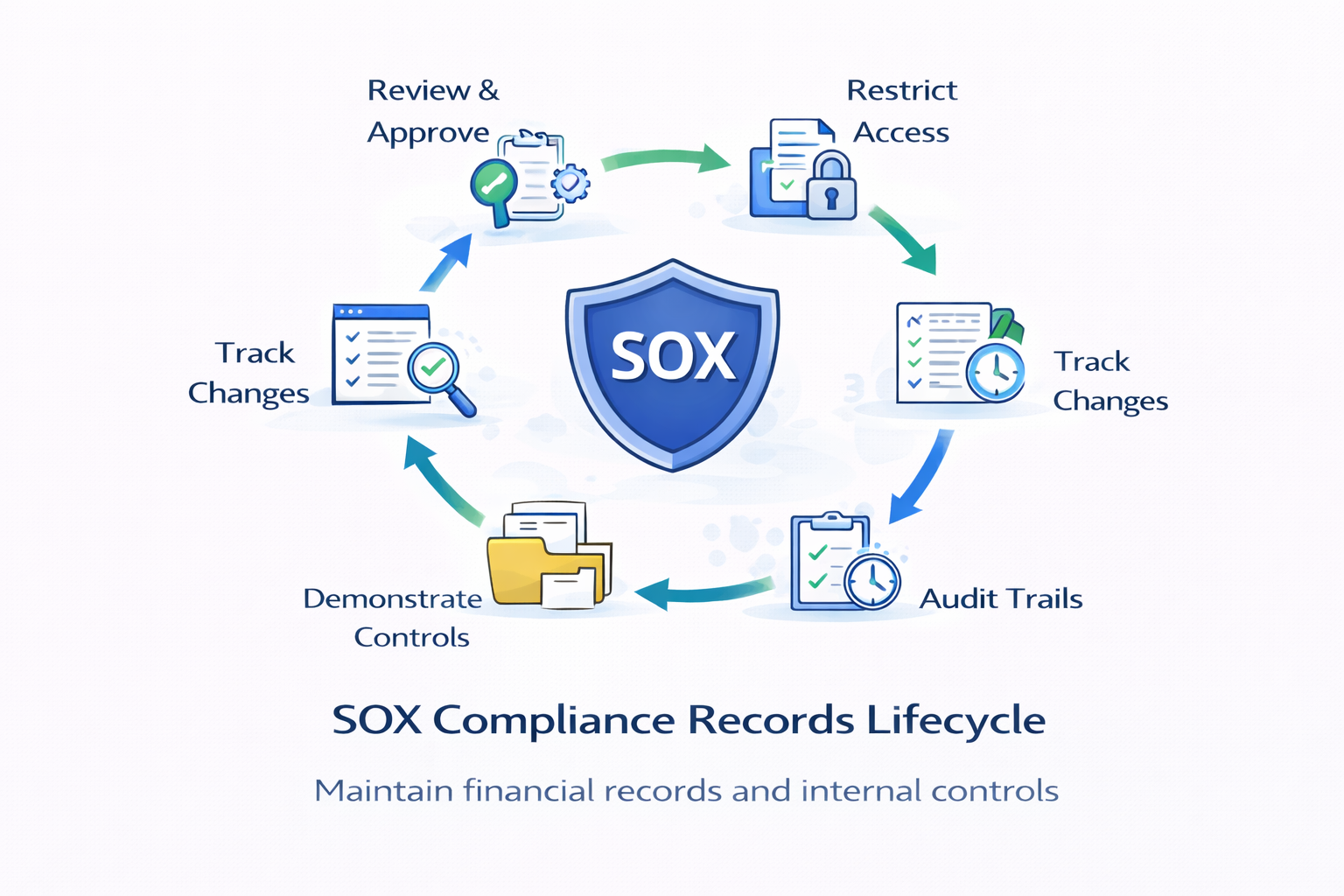
SOX (especially Sections 302 and 404) requires organizations to ensure:
Weak document control is a major risk factor in SOX audit failures.
✔ Ensures financial documents are properly reviewed and approved
✔ Prevents unauthorized or untracked changes
✔ Supports internal control requirements
✔ Provides transparency for internal and external audits
✔ Ensures integrity of financial records
✔ Supports SOX record retention requirements
| SOX Requirement | Description | LuitBiz DMS Capability |
|---|---|---|
| Internal Controls | Documented processes & approvals | Workflow-based approvals |
| Auditability | Traceable changes | Immutable audit trails |
| Access Control | Restrict financial data | Role-based permissions |
| Accountability | User-level tracking | Time-stamped logs |
| Record Retention | Maintain audit records | Secure archival & retrieval |
LuitBiz DMS supports SOX-related documentation for:
No. LuitBiz DMS provides document control features that support SOX compliance. Compliance depends on your organization’s internal controls and audit processes.
LuitBiz DMS provides audit trails, document version history, approval records, and controlled access - all required for demonstrating internal control effectiveness.
Yes. Role-based access ensures only authorized users can view or modify sensitive financial records.
Yes. All document changes, approvals, and access are logged with timestamps and user attribution.